Category: Review


Destroyer (2019) – Review
Mesmerising arthouse meets cops and robbers.
First she was bashing sea people through walls with a trident in Aquaman, now she’s a dirty cop with an axe to grind when her past comes calling. It’s more clear than ever that Nicole Kidman is enjoying somewhat of a badass renaissance. Destroyer, the latest work from Aeon Flux and The Invitation director Karyn Kusuma, is a thrilling study of a flawed woman who’s let herself be possessed by anger and enraged by guilt, under the lens of heist genre magic and arthouse panache.
LAPD detective Erin Belle (Kidman) is forced to chase up members of an old gang she was previously embedded in as part of a case, after a John Doe murder confirms the heartless leader (Toby Kebbell) is making a return. She’s a far sight from the officer she once was though; gaunt, tired, surly, brutalised by nightmarish memories with her partner (Sebastian Stan).

Kusuma gives life to Phil Hay and Matt Manfried’s screenplay with stunning refinement. She tangles with the audience’s comprehension of time slyly, implementing a heavy use of flashbacks to reinforce the emotional depth of Erin’s current predicament, while putting wheels in motion that some may take for granted until the credits roll. Rarely does the film loosen its grip, maintaining boa constrictor tension in fantastically formed sequences – some aren’t necessarily original either. A gloriously sadistic game of Russian Roulette has obvious roots in The Deer Hunter, and some of the later robberies riff on the piercing autumnal palette of Hell or High Water. But Kusuma injects a simple vendetta into the heart of the story, and you really feel that vindictive energy like a pulse.
The cinematographer, Julie Kirkwood, plays with the accepted norms of lighting to visceral effect, enforcing blinding close-ups and enhancing conflicts with character-focused shots. Rarely are eyes off of Kidman; we watch as she lays a fine beating on a former West Wing resident, and whips out at an automatic weapon from her trunk like John Wick’s sun-kissed cousin. For such a renowned and known actress, it’s a remarkably unrecognisable performance, balancing internal fury that’s “burned a circuit in her brain” under the guise of an impressive physical transformation. An burned down cop in an urban crime saga is not a role that many would pair with the Australian megastar, but this great bit of casting has gifted Kidman a career-best turn.
If Greenwoodian was a accepted adjective for scores (it will be some day), it would certainly be fitting when discussing Theodore Shapiro’s immersive composition, packed with bass and pulse-pounding repetitions any time Erin has a gun in her hand, but scoring the more honed-in scenes with unorthodox, cerebral ease. Strong music pairs well with the atmospheric sound design, capturing the crunch of gravel with the smallest breaths. While Kidman’s make-up is stunningly realised though, the decision to place a hilarious wig upon Kebbell’s head is mind-boggling, resembling a sort of gangster Tommy Wiseau. Though he holds the screen better than the more tedious domestic drama, feeling like an unnecessary layer to humanise Erin amidst her sketchy backstory – but her motivations are already evoke compassion. In many ways, Destroyer would be well-placed in a double feature with Lynne Ramsay’s You Were Never Really Here; both are unconventional, captivating, admirably brash and come from two fine (female) filmmaking talents.
Kidman gives the performance of a lifetime in a gruelling, impassioned penance parable.
Rating: ★★★★☆
Cameron Frew – @FrewFilm
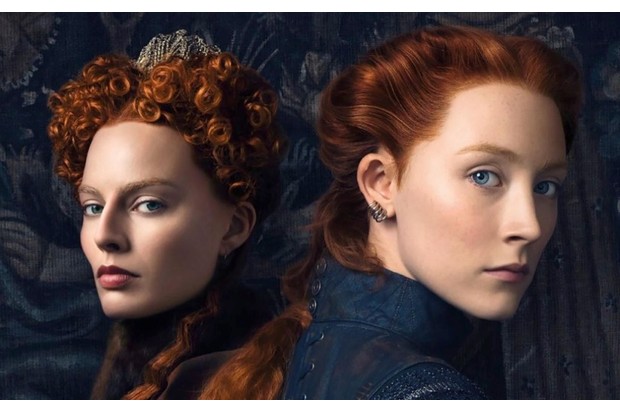
Mary Queen of Scots (2019) – Review
Historically accurate? Not really. Riveting? Quite.
Towards the royal encounter of the imaginary kind at the climax of Mary Queen of Scots, Elizabeth utters: “How cruel men are.” Very apt, for the film acts not only as a (debatably false) work of history, but a reminder of the ruthless, institutional disregard of the “whims of women” by men, as one troglodyte splutters. Despite the 450 year gap, this period piece feels rivetingly apropos to the current landscape. Not to mention its diversity; colourblind casting, two female leads and a woman in the director’s chair. Bob Dylan’s famous words about changing times come to mind.
The film chronicles the 16th century battle of mights between Queen Elizabeth I (Margot Robbie) and Mary, Queen of Scots (Saoirse Ronan). In very, very simple terms; Mary returned to Scotland from France after losing her husband. Upon arrival, she makes her position perfectly clear as Queen of Scotland. As a Catholic, she is seen as a threat to both Scotland and England’s Protestant supremacy, none more so than John Knox (David Tennant, whose work is more aggressively showy than a real stretch of his ability), a cleric who after swift dismissal from the Queen’s court, begins a tirade of hateful, abusive sermons. The problem for Elizabeth, unmarried and childless, is that Mary has a serious, dangerous claim to the English throne due to her bloodline.
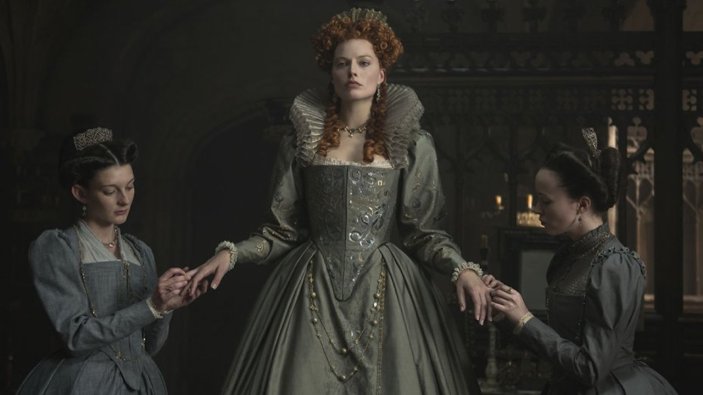
So forth begins manipulations across both sides, ushering men for Mary to marry in the hope that it lowers her claim. What’s innately refreshing is the dynamic between the two monarchs; neither hate each other, even hundreds of miles apart their comments rarely descend into spite. The agony of the fateful story is they were the only two people that could truly understand one another’s struggles; two Queens in a land overrun by the machiavellian ways of the opposite gender. Josie Rourke leans the film on its two titanic performances, a task the duo hand with grace and ferocity. Ronan’s is the more wholesome character arc; from slight uneasiness to a pragmatic force of power, all while handling that deviously tricky Scottish accent, rarely landing on a blip. Robbie’s is denser though, conveying maternal despair and loneliness under regal authority. When the pair finally do meet (after wishy-washy shots of sheets), think Heat-levels of screen magnetism.
Rourke tries to strike an interplay between the two throughout the film, intercutting their whereabouts, but instead disturbs the rather elegant, vulnerably slow rhythm to which the story unravels. The main issue is how gripping the entire feature is; if you’re going to take fictional liberties with history, at least make them exciting. But Rourke and writer Beau Willimon play things slow and loose, conjuring up entirely make-believe meetings and detrimental acts of cunnilingus, while botching the saga’s sense of time completely. Aside from the royals, the script rarely rises to the occasion of the “tumultuous times”, feeding the clergy impactful vitriol in doses but padding out the rest of the cast’s dialogue.
Max Richter’s composition embeds firmly within the storytelling but can’t quite find a way to elevate into a glorious crescendo or stir up the trauma, mostly coasting along. However, John Mathieson’s cinematography does anything but settle for adequate. While the interior scenes can feel more small-screen than cinematic (saved by the lusciously crafted costume design and beautiful make-up, which has rightfully earned Oscar nominations), he steeps frames in cold, stunning landscapes. You can practically feel the brisk, mountainous air of the Scottish vistas as the view takes your breath away. The most convincing VisitScotland ad yet maybe, but Rourke’s film establishes a captivating sense of place, acting as a transportive, if not reliable history lesson.
Ill-pacing and bland storytelling betray this powerhouse showcase of Ronan and Robbie’s boundless talents.
Rating: ★★★☆☆
Cameron Frew – @FrewFilm

Glass (2019) – Review
Fickle, hokey, silly; all the things it shouldn’t of been.
M. Night Shyamalan’s tenure saw a downward spiral through the beginning of the millennium; from confident, sublime genre pieces like The Sixth Sense and Signs to disasters like The Last Airbender and The Happening. But then came Split in 2016, a gonzo horror with a warped wit and electrifying central performance from James McAvoy. Just as the credits are about to roll though, we cut to customers talking in a diner about the villainous newly-named “The Horde”. One asks: “Is this like the crazy guy in the wheelchair they put away 15 years ago? They gave him a funny name too… what was it?” The camera pans slowly down the counter. “Mr. Glass” replies Bruce bloody Willis, evoking gasps, clenched fists and orgasms across the world’s cinemas. This remarkable twist placed Split in the same universe as Shyamalan’s earlier cult classic Unbreakable. But what would come next? You have to produce the goods after such an arousing tease. After 19 years, we have Glass.
David Dunn (Willis) now runs his own home security store while moonlighting as a brutal vigilante in a green poncho, now referred to as “The Overseer” online. After tracking down and subsequently tussling with Kevin (McAvoy), the pair are placed in Raven Hill, a psychiatric hospital. Supervising and studying them is Dr. Ellie Staple (Sarah Paulson), a doctor who specialises “in a very particular illusion of grandeur… those who believe they are superheroes”. They’re not alone though; also under Staple’s care is a heavily sedated Elijah Price (Samuel L. Jackson). As the trio grow wary of their situation, plans are put in place for some orchestrated chaos.
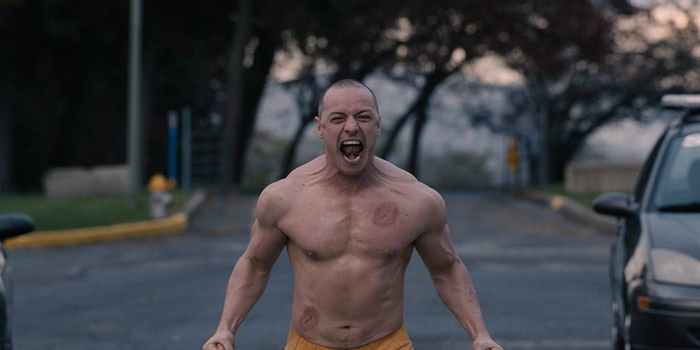
Quick recap of the three men’s powers; David has super-strength and extremely accurate intuition, having survived a catastrophic train crash without a single scratch, but his weakness is water. Kevin, aka The Beast, aka The Horde, suffers from multiple personality disorder (he has 24 but we get to see 20 in the film), and can manipulate his own physical state to achieve extraordinary feats. Elijah has extremely brittle bones (he’s suffered 94 breaks in his life), but is dangerously smart, and believes that comic books are a continuation of human history. Unbreakable deconstructed its own genre before the superhero boom happened. It was slow, somber, dark but epic, sincere and believable. Split, while sillier, kept the narrative tightly aligned with McAvoy and finely tuned in to the bizarro feel of it all. But Glass strips a lot of what made those two films work, neither endearingly solemn or intriguingly weird, more farcical and feeling more like a half-baked team-up movie than a worthy continuation.
Visually we’re back in Split territory (with cinematographer Mike Gioulakis returning), the camera whipping round scenes with a more dynamic energy as Kevin scales the walls and limbs along pipes. Although there are gorgeous wide-zooms à la Unbreakable, as well as the use of lighting as a very effective tool. As the action gains momentum and scale though, the cracks reveal themselves; a claustrophobic shooting style takes viewers out of the fight, with one too many close-ups of Willis as he’s being bear-hugged. Seeing these characters go to war in a large, open playground is epic in its own right, but the propulsive choreography simply isn’t there to take enjoyment beyond appreciating the idea.
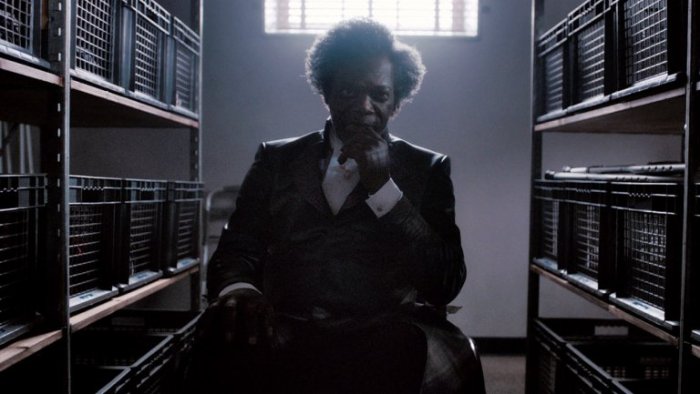
From a bracing opening, things slow right down for most of the film, as Paulson’s character monologues endlessly and dissects each character’s delusion with a tantalising, genteel stare. But the dialogue’s impact dries up fast and as it becomes a rinse-and-repeat job. Willis’ everyday man take holds some conviction, but is hindered by wooden delivery (also due to the script, let’s not talk about the “salt bae” conversation). Whereas Jackson holds the screen with the smallest twitch of the mouth or eye, compellingly inanimate – that is until he’s back in his purple coat, when his interminable Glass-splaining of comic book story tropes and gesticulating causes the unsettling aura to fade (“I truly am a mastermind” – yeesh). Other cast members pop-up; Anya Taylor-Joy is excellent despite the very small amount of time she’s afforded, Spencer Treat Clark returns as David’s son but, even though the continuous casting is refreshing, he’s really rather weak. Leaving McAvoy, who completely steals the show with a barnstorming, unbelievably transformative performance that takes versatility to a new level, even succeeding in the face of a script that does very little to help (we’re all agreed that Patricia is his best personality, right?). In a just world, he’d be in awards conversations.
There are some attractive flourishes; the mental game of cat-and-mouse between Dunn and Kevin’s ego produces some invigorating little moments (helped hugely by West Dylan Thordson’s nerve-shreddingly screeching composition) and a distressing flashback scene on a fair ride will have you covering your eyes. But the screenplay is a tonal and logical shambles, spending too long setting up and discussing things that never happen and discussing the formerly delicate intricacies of comic mythology to the point where it all feels contrived and pointless. Shyamalan’s strengths have always been in raw storytelling, emoting through the moving image rather than dialogue – this, sadly, is some of his worst writing in years. The twisty-turny journey to get to the credits feels like a reflection on his own career; some of his trademark revelations are engraved in cinematic legend, others are just plain daft. Glass’ final reveal(s) fall into the latter category; confounding and carrying as much dramatic strength as Elijah’s legs.
Shyamalan’s final entry in his unlikely cinematic universe is a Split sequel with Unbreakable filling; but what’s the point if none of it makes sense?
Rating: ★★☆☆☆
Cameron Frew – @FrewFilm

Vice (2019) – Review
Chaos confused with flourish.

The Favourite (2019) – Review
Bawdy, raucous and wicked.

The House That Jack Built: Director’s Cut (2018) – Review
Muscular and mythical, tiresome and nauseating.
Continue reading The House That Jack Built: Director’s Cut (2018) – Review

Roma (2018) – Review
A devine vision, both inspiring and disquieting.

Spider-Man: Into the Spider-Verse (2018) – Review
First-rate Spidey meets world-class animation.
Continue reading Spider-Man: Into the Spider-Verse (2018) – Review
The Old Man & The Gun (2018) – Review
Cosy, unassuming caper with pure heart.
There’s a scene in David Lowery’s previous film, A Ghost Story, in which two white-sheeted ghosts stare at each other from their respective homes, communicating without words in their deafening blankness. “Who are you waiting for?” one asks. “I can’t remember” they reply. This almost poetic agony is a testament to Lowery’s humble ability to tell an affecting story. While that work was an allegory on the grief that follows the passing of one’s life, The Old Man & The Gun, based on a mesmerising New Yorker article by David Grann, is a tribute to fulfilment of one’s life, a gentle, wistful oversight of a gentleman’s love for crime, an tender affair that is one of the most pleasant, ear-to-ear grin-inducing treats of the year.
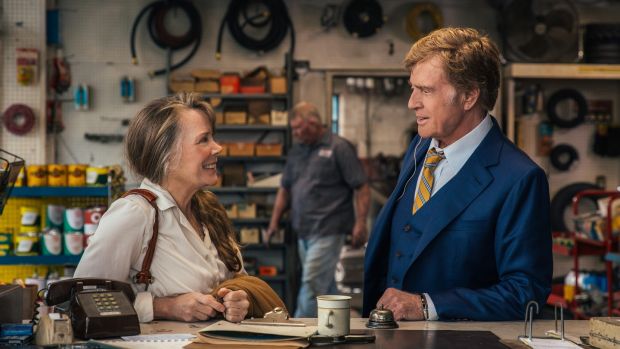
This (mostly) true story revolves around Forrest Tucker (Robert Redford), a 70-year-old with an affinity for robbing banks. His long-spanning, expert career as a criminal has enchanted those he steals from with his unexpected kindness, and when detective John Hunt (Casey Affleck) is assigned to the case, he too is swooped up by his talent and principles.
Lowery’s endearing spin on the heist genre is a discreet thrill-ride, the joy arising from each counterpart of the movie-making machine working in handsome unison. Daniel Hart returns as his right-hand composer, and injects a bluesy peppiness to convey the twilight heart and adventure a story as unbelievable as this deserves. He captures the film’s fleeting ethos, whether it’s in an exquisite diner tête-à-tête or an off-road cash-flying car chase.
This is reportedly Redford’s final swansong; quite the fitting sendoff, a performance in which his charisma hangs slow and steady, in which his carefully refined magnetism is as effective as his earlier days in the star-making Butch Cassidy and the Sundance Kidand All the President’s Men. This is a turn which feels like the performer playing himself (or at least, the person we think we know). Bank robbers are, generally, likeable rogues, whether it be for their devilish villainy or ulterior motives we as the audience can route for. But Tucker had no mean-streak, no crushing debt or ransom to pay; he just loved the buzz of the chase. It’s a rare plotless drive that bears down on Redford to fill in the gaps, and he does just that, like a seasoned pro without a worry in the world.
Following an opening robbery and a practiced switcheroo to throw cops off his trail, he spots a lady outside of a broken down car at the side of the motorway. He pulls over and asks her if she needs any help, craftily hiding behind the bonnet as police cars fly by. This turns out to be more than a passing convenience though, as he and Jewel (Sissy Spacek) spark up a lovely companionship. In their scenes together, the natural, uncompromising chemistry fuels dialogue (also written by Lowery) which you lap up no matter how inconsequential.
The dazzling ensemble is a who’s who of talent; alongside Redford and Spacek is Danny Glover and Tom Waits as fellow addicted thieves (the latter of which has a scene-stealing Christmas story) who too have a similar hangdog confidence. John David Washington shows up in another police role following this year’s much different BlacKkKlansman. Affleck plays it down here, resigned in quietly determined but often lax attitude. He finds relation and admiration in Tucker, almost more of a personal game with a friend than a vengeful pursuit of crime. Think of it as Heat, but more like a cosy fireplace than a brooding inferno.
The decision to use 16mm film stock only tucks you in tighter into this warm blanket of a picture, comfortably pastiching classic movies of old (look out for the occasional splicing of cowboy flicks) as a respectful tribute without disregarding their worth. Grainy, loose, pretty cinematography from Joe Anderson is illuminating, through cutesy close-ups, sublime framing and stunning pink-tinged sunrises. But the film’s greatest success is in its irresistible charm, swaying you through a lightweight saga that champions human spirit. One character says he asked Tucker, “Surely there’s an easier way to make a living?” Tucker responded: “I’m not talking about making a living, I’m just talking about living.”
An unreserved, mellow triumph that soothes the soul.
Rating: ★★★★★
Cameron Frew – @FrewFilm
 FrewFilm